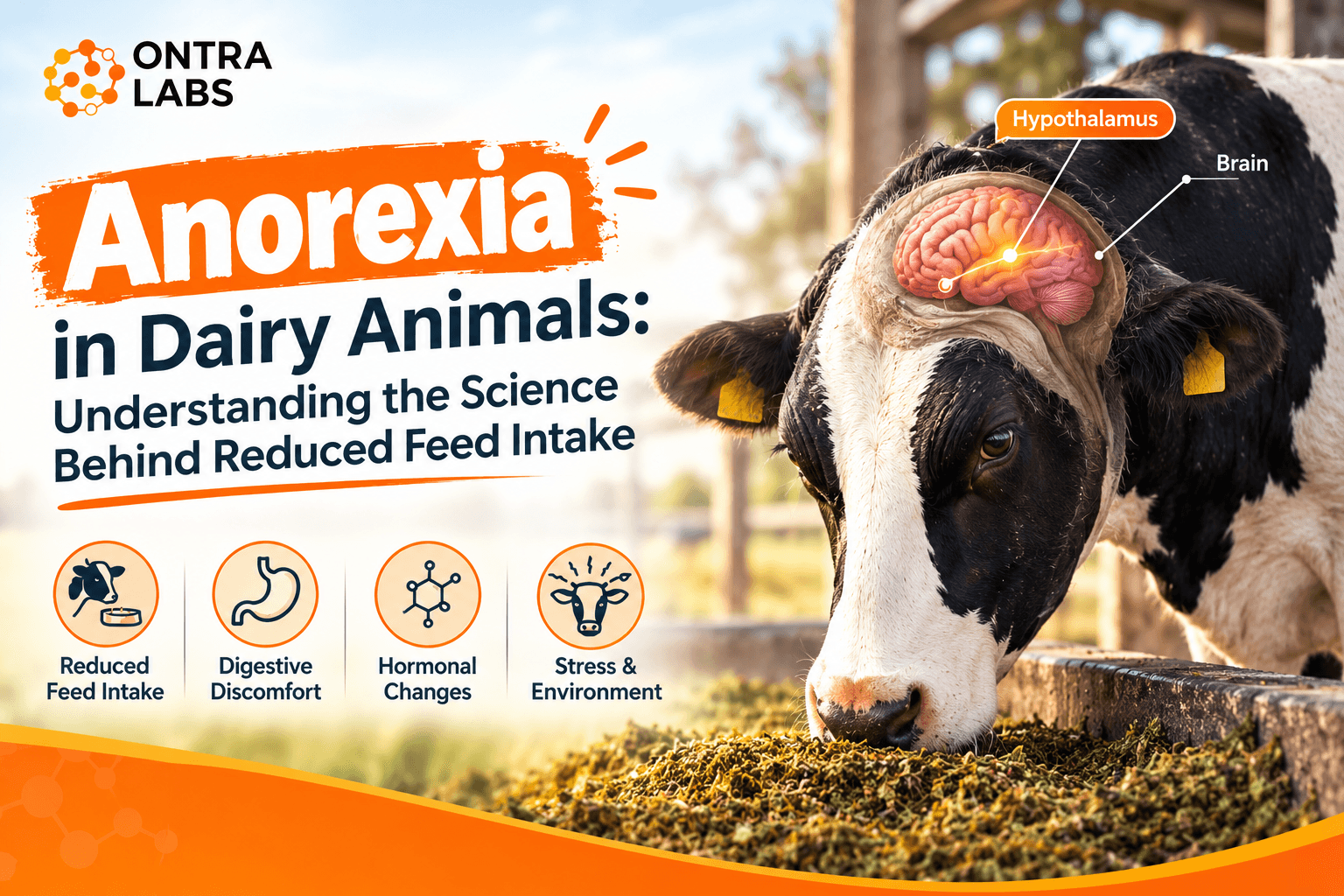
A dairy cow that suddenly stops eating is not simply experiencing a "loss of appetite." Reduced feed intake is often the visible end point of metabolic, inflammatory, gastrointestinal or environmental disturbances occurring inside the animal. This is particularly important during the transition period. Around calving, dry matter intake (DMI) commonly falls just when the nutrient requirement for milk production rises sharply. The resulting negative energy balance increases fat mobilization and metabolic stress, creating a physiological environment in which diseases such as ketosis, fatty liver, hypocalcemia, metritis and displaced abomasum can develop or interact with each other. Recent research describes this period as an interconnected endocrine–hepatic–immune challenge rather than a single nutritional problem.
Anorexia Is Both a Sign and a Disease Amplifier
The relationship between disease and anorexia is bidirectional.
During infection or inflammation, mediators such as IL-1β, IL-6 and TNF-α can alter central appetite regulation and reduce feeding behavior. The resulting fall in DMI further worsens energy balance, potentially increasing adipose mobilization and ketone production.
This mechanism has been demonstrated in dairy cows with postpartum disease, where reduced DMI & negative energy balance are closely associated with inflammatory disorders such as metritis.
Therefore, a useful clinical concept is:
Inflammation → reduced DMI → negative energy balance → metabolic stress → further reduction in DMI
Ketosis: The Metabolic Link to Anorexia
One of the most important causes of anorexia in early-lactation cows is ketosis.
When energy intake cannot meet the demands of lactation, body fat is mobilized and circulating NEFA concentrations increase. The liver converts part of this fatty-acid load into ketone bodies, particularly β-hydroxybutyrate (BHB). Excessive ketogenesis, together with altered hepatic metabolism, can contribute to reduced appetite.
This is why BHB measurement is valuable when investigating an anorectic fresh cow. Current research increasingly emphasizes combining BHB with other metabolic and behavioral indicators for earlier identification of cows at risk of ketosis.
Importantly, ketosis may also coexist with other disorders. A cow diagnosed with ketosis should therefore not automatically be considered a case of "simple ketosis."
Don't Miss Hypocalcemia & Gastrointestinal Dysfunction
Hypocalcemia can reduce gastrointestinal motility because calcium is essential for smooth-muscle contraction. A fresh cow with poor appetite, reduced rumen contractions, weakness or recumbency therefore warrants calcium assessment.
Similarly, displaced abomasum (DA) can present with reduced appetite, reduced fecal output and declining milk production. Recent reviews describe an important relationship between ketosis, gastrointestinal hypomotility and displaced abomasum. When DA and ketosis occur together, correcting only the metabolic abnormality may not restore normal feed intake.
Heat Stress: A Major Non-Infectious Cause
In hot and humid conditions, reduced feed intake is a predictable physiological response. Cows decrease feeding activity partly to reduce metabolic heat production.
A recent meta-analysis involving 31 studies and 34 trials found that increasing temperature-humidity index (THI) was significantly associated with reductions in DMI and energy-corrected milk.
Interestingly, research also shows that heat stress affects metabolism beyond the reduction in feed intake. Altered glucose and lipid metabolism, increased maintenance requirements and physiological stress can contribute to production losses.
Thus, treating heat-stress-associated anorexia begins with cooling, water availability and environmental management, not simply an appetite stimulant.
A Practical Diagnostic Approach
For veterinarians, anorexia should trigger a structured assessment rather than empirical treatment.
Ask:
When did feed intake decline?
Then correlate it with:
- Days in milk and calving history
- Temperature and hydration
- Rumen motility and fecal output
- Milk production
- Udder and uterine findings
- Locomotion and pain
- BHB and calcium where indicated
- Feed, water and environmental conditions
If several animals show anorexia simultaneously, shift from an individual-animal approach to a herd investigation of TMR, forage quality, water, feeding management, heat load and possible mycotoxin exposure.
Management: Treat the Cause, Restore Intake There is no universal "treatment for anorexia."
The scientific approach is:
Identify the cause → Correct the primary disorder → Restore metabolic/rumen function → Support hydration and nutrition → Monitor recovery
Fresh, palatable feed and clean water are fundamental. Ketosis, hypocalcemia, mastitis, metritis, gastrointestinal disease, pain and heat stress each require cause -specific veterinary management.
Appetite-supportive or liver/rumen-support products may have a role as adjuncts in selected cases, but they should not delay diagnosis of the primary disorder.
The Future: Detecting Anorexia Before It Becomes Obvious
An important development in modern dairy medicine is the use of feeding time, rumination, activity, milk yield and automated sensors to identify animals deviating from their normal behavior.
Research published in 2026 demonstrates that heat stress, lameness and mastitis can produce measurable disruptions in feeding and rumination behavior, supporting the concept that behavioral changes may provide an early health signal.
Conclusion
Anorexia is not merely a feeding problem - it is a biological signal. In dairy animals, reduced feed intake may reflect the interaction of energy balance, inflammation, liver metabolism, rumen function, calcium homeostasis and environmental stress.
For the veterinarian, the most important question is therefore not "Which appetite stimulant should I use?"
but:
"What has changed in this animal that made it stop eating?"
Answering that question early can improve recovery, protect milk production and prevent a mild reduction in intake from progressing into a much more serious metabolic or infectious disorder.