Ontra Labs
Educational

Fatty Liver, Ketosis & Negative Energy Balance in Dairy Cattle

Around calving, cows often eat less while their energy needs rise. This negative energy balance can lead the body to mobilise fat, which may contribute to fatty liver and ketosis.

Reviewed by the Ontra Animal Health team

How it develops

When energy intake falls short of demand, the cow draws on body fat. Excess fat reaching the liver can impair its function, while ketone production rises, seen as ketosis.

Signs and risk factors

Reduced appetite, drop in milk yield and dullness can be early indicators. Over-conditioned cows at calving and abrupt feed changes increase the risk.

Supporting metabolic health

Management centres on transition-period nutrition, appetite and liver support under veterinary guidance, helping the cow through the highest-demand weeks.
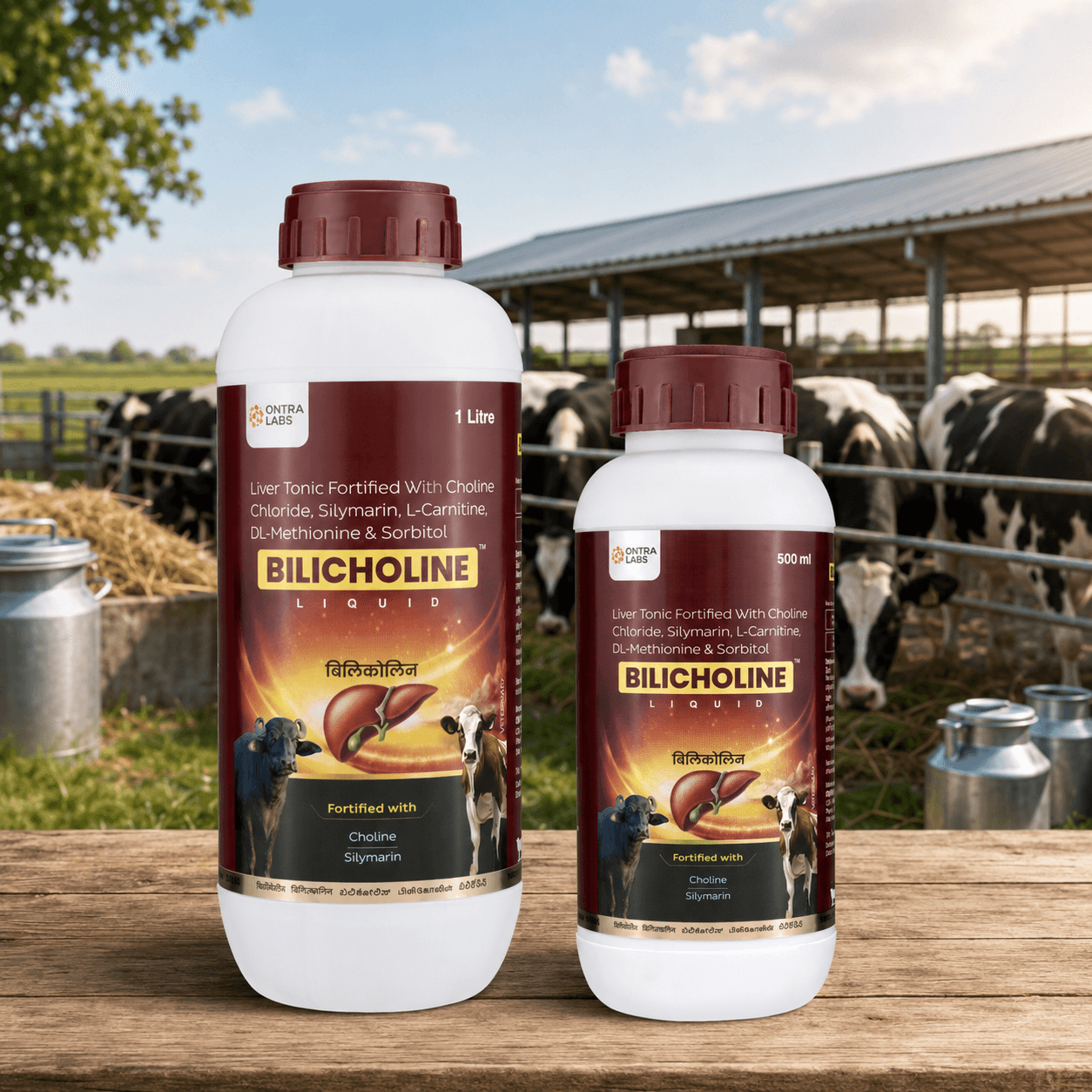
Ontra products for this challenge
Frequently asked
Why do cows stop eating after calving?
Reduced intake around calving is common and can be worsened by metabolic stress. Persistent poor appetite should be assessed by a veterinarian.

This information is educational and is not a substitute for professional advice. Always consult a registered veterinarian for diagnosis and treatment.