
Liquid
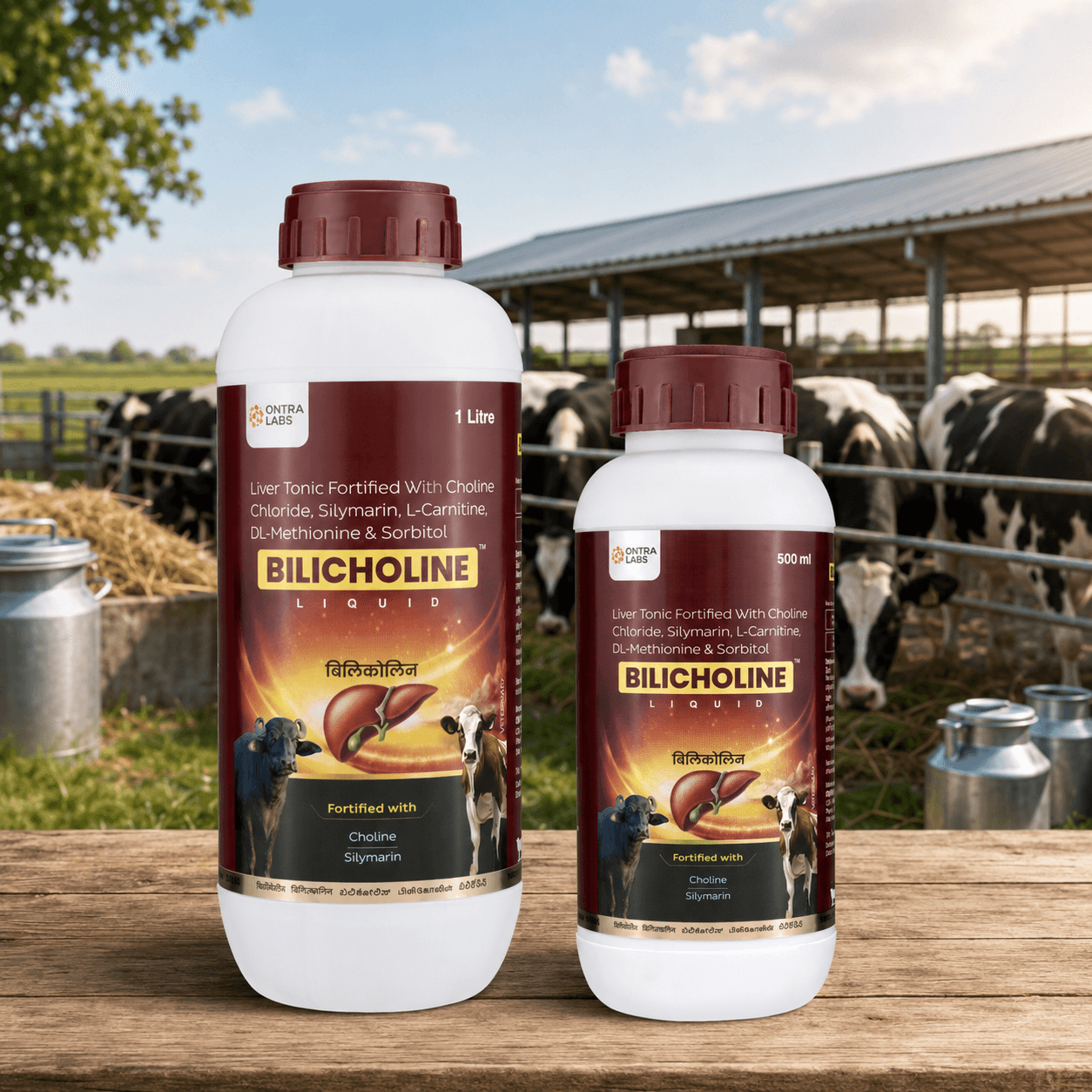
Bilicholine Liquid
Fat mobilizer, liver protector, and metabolic booster for dairy animals.
- Packs
- 500 ml · 1 L
- Species
- Cattle, Buffalo, Sheep, Goat
Composition
- Fat Mobilizers
- Energy & Metabolic Boosters
- Liver Protectors
- Essential Vitamins
- Trace Minerals
- Digestive Support
Indications
- Loss of appetite / poor feed intake
- Fatty liver syndrome
- Ketosis and negative energy balance
- Periparturient support (before and after calving)
Dosage
Large animals (cow/buffalo): 50, 100 ml daily (continue 10, 12 days in clinical cases). Transition support: 100 ml daily starting 7 days before calving, continuing 7 days after. Small animals (sheep & goat): 10, 20 ml daily. Or as advised by a registered veterinarian.
Frequently asked
- What causes poor appetite (anorexia) in dairy animals?
- Poor appetite is commonly caused by liver disorders, metabolic diseases, infections, indigestion, stress, or nutritional deficiencies.
- Why is liver health important in dairy animals?
- The liver regulates metabolism, detoxification, digestion, and energy production, making it essential for milk yield, fertility, and overall health.
- What are the common signs of liver dysfunction in dairy animals?
- Reduced appetite, low milk production, weight loss, dullness, ketosis, and poor recovery from illness are common signs of impaired liver function.
- Which animals are at higher risk of liver disorders?
- High-yielding dairy cows and buffaloes during the transition period (before and after calving) are at the greatest risk.
- Can liver disorders reduce milk production?
- Yes. Liver dysfunction impairs nutrient metabolism and energy utilization, leading to reduced feed intake and decreased milk yield.
- How are liver disorders managed in dairy animals?
- Treatment includes correcting the underlying cause, providing nutritional support, maintaining energy balance, and administering appropriate hepatoprotective therapy under veterinary guidance.
- How can liver disorders be prevented?
- Balanced nutrition, proper transition cow management, good-quality feed, mycotoxin control, and timely veterinary care help maintain liver health.
- When should liver-support therapy be considered?
- Liver-support therapy is beneficial during reduced appetite, fatty liver, ketosis, post-calving stress, toxin exposure, prolonged illness, or recovery from infections.