Ontra Labs
Educational

Lumpy Skin Disease in Cattle

Lumpy skin disease (LSD) is a viral disease of cattle and buffalo, spread mainly by biting insects. It causes fever, firm nodules across the skin and swollen lymph nodes, and often a sharp fall in milk yield.

Reviewed by the ONTRA LABS ANIMAL HEALTH team

How it spreads

Mosquitoes, flies and ticks carry the virus from a sick animal to a healthy one in a single bite, so animals do not need to touch for it to move through a herd. Shared needles, unclean instruments and common feed and water troughs also pass it between animals.

Which animals are most at risk

Both cattle and buffalo are affected. Young calves, pregnant and lactating cows and breeding bulls generally warrant the closest daily attention, though every animal in an affected area is worth watching.

The signs, and the phase before them

There is a period after infection when the virus is multiplying and the animal still looks well. The earliest signs are easy to miss: an animal goes off feed, or feels warmer than usual for more than a day, before any lump appears. Running a hand over the neck, back and legs can find swelling under the skin earlier than the eye can.

Recovery takes longer than the fever

Once the fever settles the animal is not necessarily back. Milk yield returns gradually and fertility can be affected, so feed, appetite and body condition are worth supporting through the whole recovery rather than only while the animal is visibly ill.

Reducing exposure around the shed

Removing standing water, controlling insects at dawn and dusk when they are most active, and keeping the shed and its surroundings dry and clean all reduce exposure. These measures lower the risk rather than removing it.
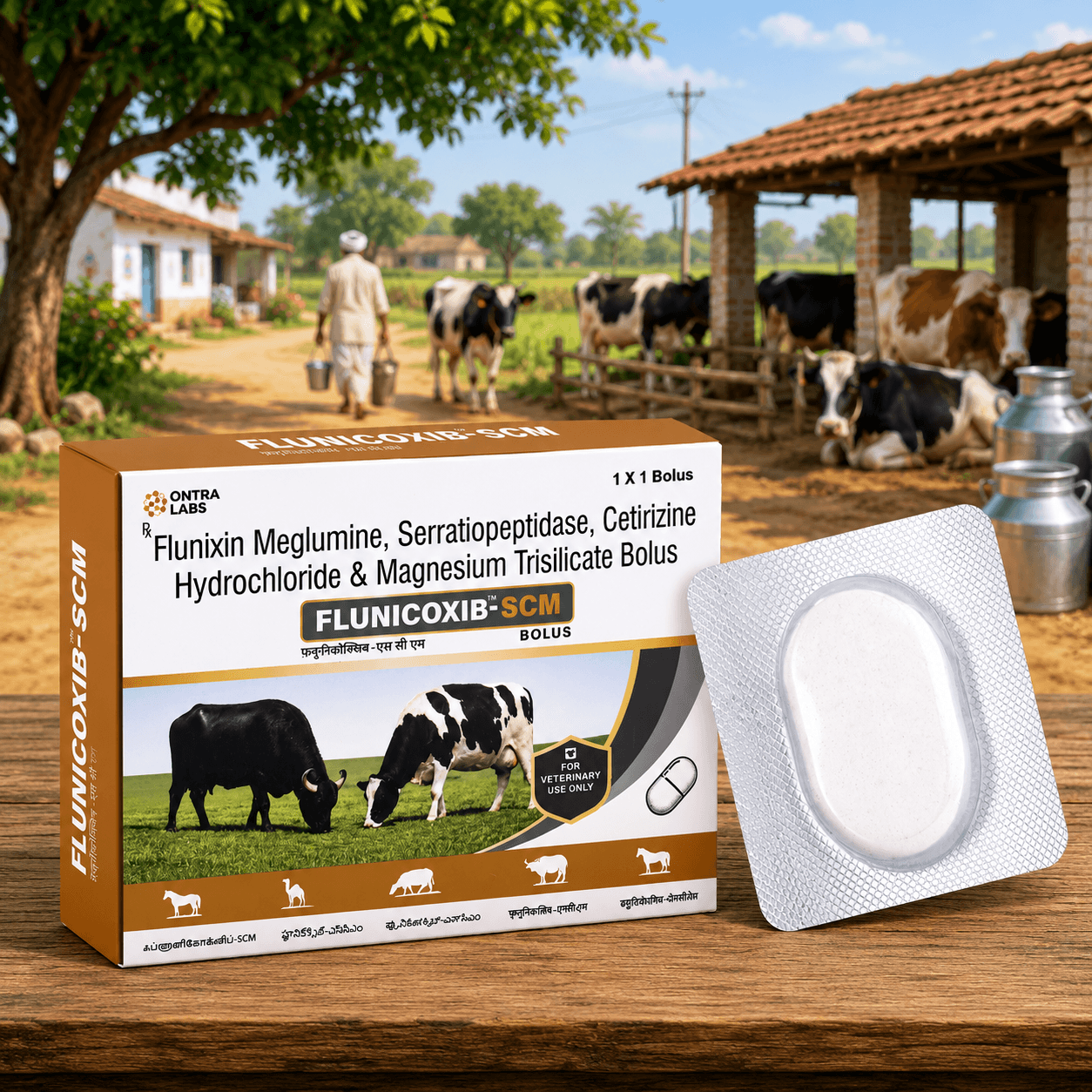
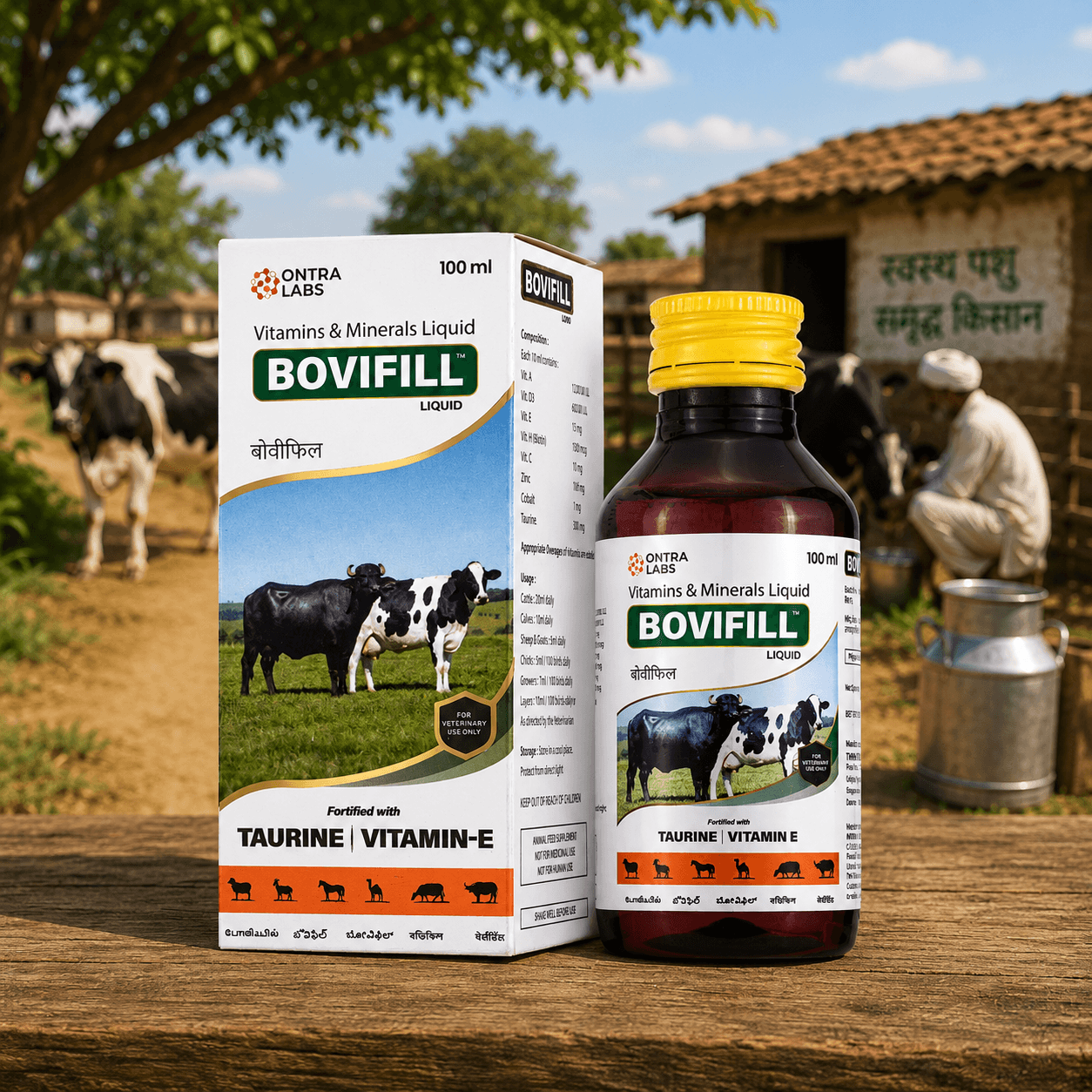
Ontra products for this challenge
Frequently asked
How does lumpy skin disease spread between animals?
Mainly through biting insects such as mosquitoes, flies and ticks, which carry the virus from a sick animal to a healthy one. Animals do not need to touch for it to spread. Shared needles, unclean instruments and common feed and water can also move it.
Can buffalo get lumpy skin disease?
Yes. Both cattle and buffalo are affected. Young calves, pregnant and lactating animals and breeding bulls generally deserve the closest daily attention in an affected area.
What are the first signs of lumpy skin disease?
Often a drop in feed intake and a temperature that stays raised for more than a day, before any nodule is visible. Passing a hand over the neck, back and legs can find swelling under the skin before it can be seen.
How long does a cow take to recover from lumpy skin disease?
The fever settles well before the animal is back to normal. Milk yield returns gradually over weeks and fertility can be affected, so recovery support should continue after the animal stops looking ill. Your veterinarian can advise for your herd.
Is lumpy skin disease usually fatal?
Death is uncommon. The larger cost to a farm is normally the milk lost during the illness and the weeks of poor body condition that follow it.
The same subject, in plain language

Dairy Farmer’s Corner tells this as a story a farmer can follow, published in 6 languages.

Related conditions

This information is educational and is not a substitute for professional advice. Always consult a registered veterinarian for diagnosis and treatment.