
Bolus
Flunicoxib-SCM Bolus
Comprehensive control of pain, inflammation, allergy and gastric irritation.
- Pack
- 1 Bolus
- Species
- Cattle, Buffalo
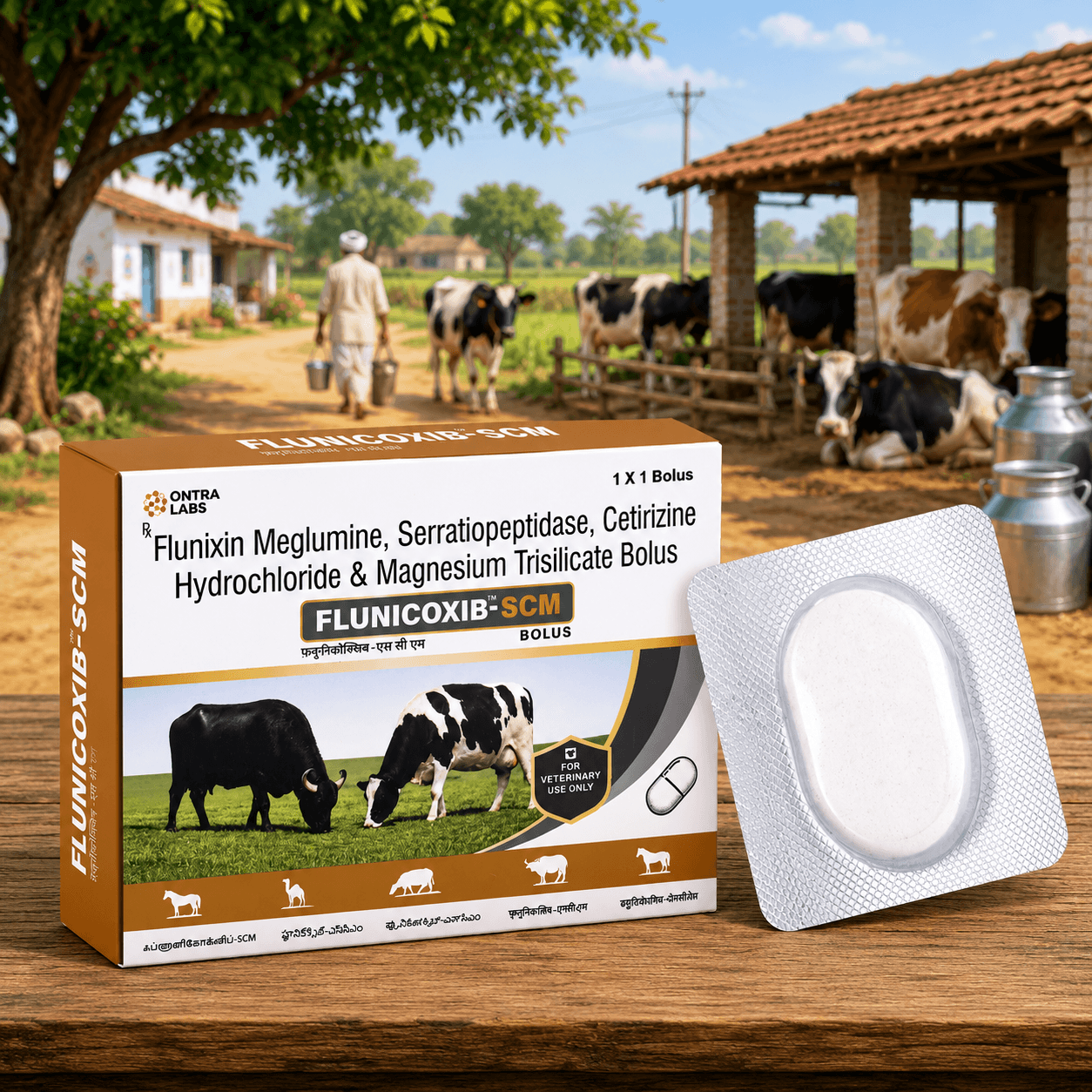
Composition
- Flunixine Meglumine
- Serratiopeptidase
- Cetirizine
- Magnesium Trisilicate
Indications
- Comprehensive control of pain, inflammation, allergy and gastric irritation
- Supportive care in mastitis, uterine infections, respiratory conditions
- Fever and endotoxemia
- Musculoskeletal and visceral pain
Dosage
One bolus daily for 5, 7 days to manage severe pain, fever and inflammation. Or as advised by a registered veterinarian.
Frequently asked
- What is the role of serratiopeptidase in inflammatory conditions?
- Serratiopeptidase is a proteolytic enzyme used as an adjunct in inflammatory conditions. It helps support the management of tissue swelling and inflammatory exudates, complementing the anti-inflammatory action of NSAID therapy.
- Why is an antihistamine included in an anti-inflammatory formulation?
- Histamine contributes to vasodilation, vascular permeability, itching and other inflammatory or allergic responses. Cetirizine, an H1-antihistamine, helps control histamine-mediated responses and provides an additional mechanism of action in conditions involving allergic or inflammatory reactions.
- What is the benefit of adding magnesium trisilicate in the NSAID formulation?
- Magnesium trisilicate acts as an antacid and helps buffer gastric acidity. Its inclusion provides gastric support alongside an NSAID, which is particularly relevant because NSAIDs can affect the gastrointestinal tract.
- Can an anti-inflammatory bolus replace antibiotic therapy?
- No. An anti-inflammatory bolus does not replace antibiotic therapy when a bacterial infection is present. It can be given alongside appropriate antibiotic treatment to help control associated pain, fever, inflammation and tissue swelling, while the antibiotic targets the underlying bacterial infection.