
Inj.
Cefroute-Tazo Inj.
A broad-spectrum anti-infective for veterinary use under professional supervision.
- Packs
- 3375 mg · 4500 mg
- Species
- Cattle, Buffalo, Calf, Sheep, Goat, Horse
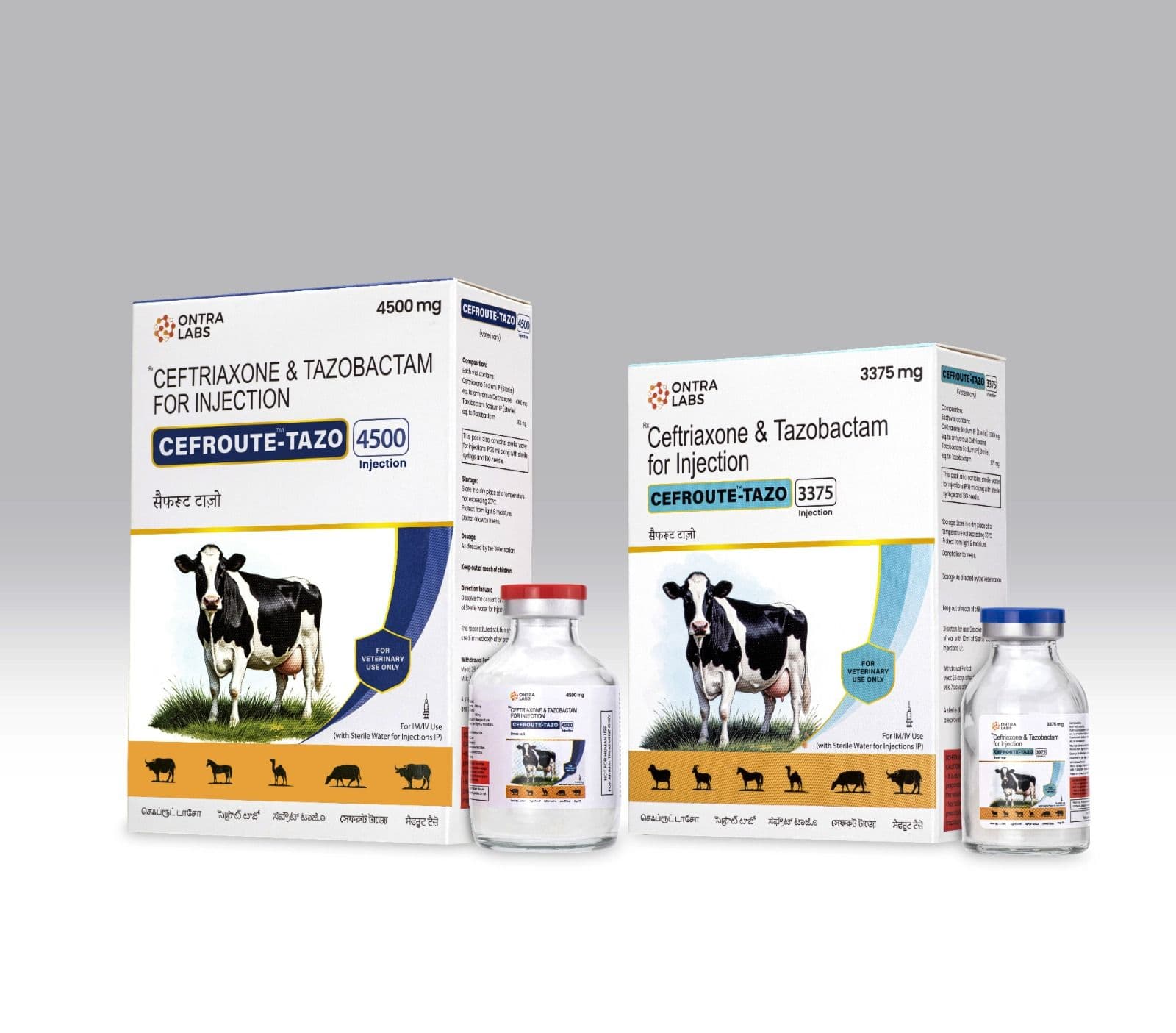
Composition
- Ceftriaxone
- Tazobactam
Indications
- Mastitis
- Pneumonia and haemorrhagic septicaemia
- Cystitis and nephritis
- Metritis and endometritis
- Horn and tail amputation
- Bone and joint infection
Dosage
Cattle & buffalo: 5, 10 mg/kg body weight.
Calf, sheep & goat: 10, 15 mg/kg body weight.
Horse: 15, 25 mg/kg body weight.
Frequently asked
- What is the mechanism of action of ceftriaxone?
- Ceftriaxone is a third-generation cephalosporin that inhibits bacterial cell wall synthesis, leading to bacterial cell death. It exhibits time-dependent bactericidal activity.
- How is ceftriaxone distributed in the body?
- After administration, ceftriaxone is widely distributed into body tissues and fluids, including the lungs, uterus, mammary gland, joints, and extracellular fluid, achieving therapeutic concentrations at infection sites.
- How is ceftriaxone eliminated from the body?
- Ceftriaxone is eliminated through both the kidneys and the biliary system, providing dual routes of excretion and reducing dependence on a single elimination pathway.
- What pharmacokinetic property makes ceftriaxone suitable for treating bacterial infections?
- Ceftriaxone has a relatively long elimination half-life and high protein binding, allowing sustained therapeutic concentrations and less frequent dosing compared with many other cephalosporins.
- What pharmacodynamic parameter predicts the efficacy of ceftriaxone?
- The efficacy of ceftriaxone is primarily determined by the time that free drug concentrations remain above the Minimum Inhibitory Concentration (fT>MIC) of the target pathogen. Maintaining concentrations above the MIC for an adequate duration is essential for optimal bacterial killing.